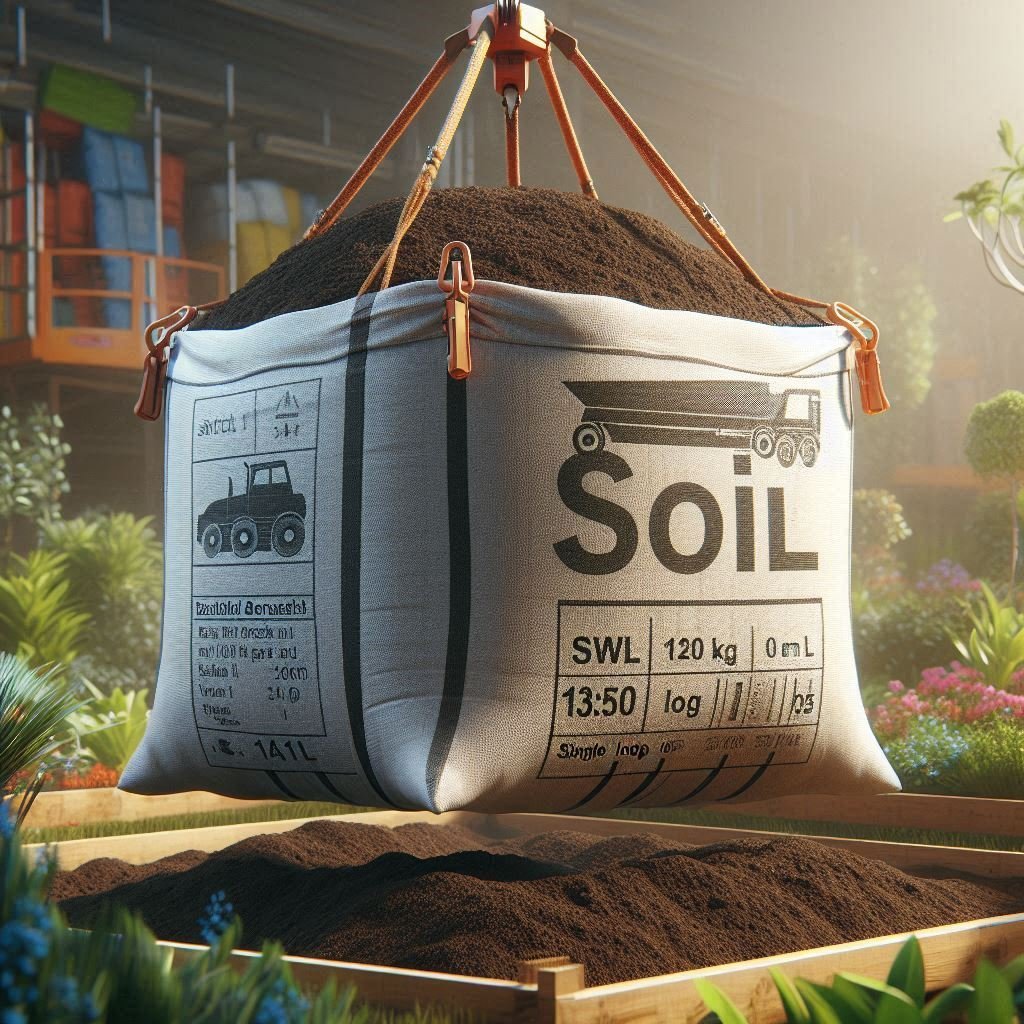
Selecting the correct Flexible Intermediate Bulk Container (FIBC) design is essential for preventing material contamination, ensuring electrostatic safety, and maximizing maritime and road freight efficiency. This technical guide outlines the four primary structural models and electrostatic fabric categories defined under ISO 21898 and IEC 61340-4-4.
1. Primary Structural FIBC Designs
- Standard 4-Loop U-Panel Bags: Constructed from one continuous U-shaped base/side panel and two separate side panels. Offers exceptional dimensional stability and uniform stress distribution for general dry powders and minerals.
- Circular (Tubular) Bags: Seamless woven fabric tube eliminating vertical seams on the body panels. Ideal for fine powders susceptible to seam sifting.
- Baffle Bags (Q-Bags): Features internal perforated polypropylene panels (baffles) sewn across all four corners. Retains a crisp rectangular shape upon filling, yielding up to 30% greater pallet loading density in shipping containers.
- 1 & 2 Loop Bags: Constructed from circular fabric where the lifting loops are an integral extension of the body fabric itself. Cost-effective and engineered for high-speed automated fertilizer and agricultural bagging lines.
2. Electrostatic Safety Classifications (Type A, B, C, D)
| Type | Fabric Properties | Breakdown Voltage / Resistance | Permitted Use Environment |
|---|---|---|---|
| Type A | Plain woven polypropylene with no static protection | No voltage limit | Non-flammable powders only (sand, stones, crops) |
| Type B | Insulating fabric preventing propagating brush discharges | Breakdown voltage < 6 kV | Dry combustible dusts (MIE > 3 mJ) without flammable vapors |
| Type C | Conductive grid threads interconnected and grounded | Ground resistance < 10⁷ Ω | Flammable dusts and explosive solvent atmospheres (Zones 1 & 2) |
| Type D | Static dissipative fabric with corona discharge (no grounding needed) | IEC 61340-4-4 certified | Combustible dust atmospheres where earthing cannot be guaranteed |
Request Tailored Technical FIBC Pricing
Consult our packaging engineering specialists for custom drawing approvals, CAD samples, and binding DAP/DDP wholesale contracts.
Engineering Comparison: FIBC Rigging & Stability Blueprints
Selecting the optimal bulk container requires balancing discharge precision, pallet stacking footprint, and anti-static classification. The technical cross-sections below outline key commercial specifications: